
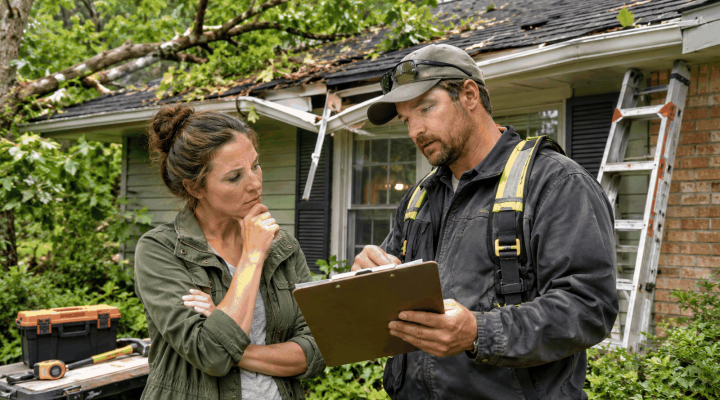
 When high winds pull away a section of guttering or damage roof shingles, a homeowner may feel pressure to hire the first contractor who answers the phone. Water intrusion can make the situation urgent, but rushed decisions may also lead to unnecessary work and expensive financing. People examining financial options for urgent home repairs should begin by protecting the property, documenting damage, and understanding any insurance coverage before committing to a large repair bill. A methodical response can limit both physical and financial damage.
Safety Comes Before the Estimate
Keep clear of downed wires, unstable branches, and damaged structures. Do not climb onto a roof during bad weather or attempt repairs that require equipment or skills you do not have. A qualified professional can assess conditions that are difficult to judge from the ground. If water is entering the home, identify safe temporary measures such as moving belongings away from affected areas and contacting an emergency restoration provider when appropriate.
Take photographs from safe locations and record when the damage occurred. This creates a useful reference for insurers, contractors, and your own records. Keep receipts for reasonable emergency protection work, but confirm with your insurer how claims and reimbursement are handled. A temporary fix designed to prevent additional damage is not necessarily the same as approval for an entire replacement project.
Understand What Insurance May and May Not Cover
Home insurance policies differ in their deductibles, exclusions, and claim procedures. Contact your insurer promptly and describe the incident accurately. Ask whether an adjuster needs to inspect the property before permanent repairs begin, how estimates should be submitted, and which emergency measures are appropriate. Do not assume that every storm-related expense will be reimbursed or that the lowest estimate will automatically determine the claim.
A deductible can still leave a significant bill even when a claim is covered. Record that amount separately from other potential costs, such as upgrading undamaged materials or choosing optional improvements. Those expenses may be the homeowner’s responsibility. Having two clear totals—insurance-related out-of-pocket expenses and unrelated upgrades—prevents confusion about how much financing is actually required.
Get a Written Scope of Work
A contractor’s quote should describe what will be repaired, the materials to be used, disposal arrangements, expected timing, and payment terms. Ask whether damage is limited to the gutter system or whether underlying fascia, flashing, or roofing materials also require attention. If the problem is extensive and conditions allow, obtain another qualified assessment. Comparing written scopes helps identify real differences in recommended work.
Beware of pressure to sign immediately, unusual demands for large cash deposits, or promises that insurance will definitely cover everything. Verify applicable licences, insurance, references, and local requirements where relevant. A lower price is not a saving if poor workmanship leads to another repair in the next heavy rainfall.
Put the Repair Into a Household Cash Plan
Once the urgent and optional costs are separated, review available savings and any reimbursement schedule. An insurance payment may arrive later than the contractor expects to be paid. Ask whether the contractor offers a legitimate staged payment schedule tied to completed work. Do not agree to payment milestones you cannot meet, even if the estimated reimbursement seems likely.
If borrowing remains under consideration, compare the full cost of financing with the amount genuinely needed. Include interest, fees, and the timing of repayments. Calculate whether the household could still cover housing, utilities, groceries, and existing debts if the insurance claim took longer than expected. That stress test is more useful than choosing a lender solely because its application is convenient.
Plan for the Less Dramatic Repairs Too
Storm damage attracts attention, but routine maintenance often determines how well a home handles the next storm. Clearing drainage systems, inspecting loose fittings, and addressing minor leaks before winter can reduce future emergencies. Establish a dedicated maintenance savings category and update it as the house ages. A homeowner with an older roof or mature trees may need a larger reserve than someone in a newer property.
The central lesson is to separate immediate protection from permanent reconstruction. Safe action, careful documentation, accurate estimates, and a repayment plan built on real cash flow are the strongest tools for handling a weather-related repair without allowing the financial aftermath to last longer than the storm itself.